Efforts for health management

Message from the President

The Nisshin OilliO Group promotes initiatives that maintain and improve the health of all our employees. We believe it is our duty to ensure they can work with a sense of security and vitality while leading healthy, prosperous lives.
These initiatives maximize potential and foster a vibrant organizational culture. They also improve our business’s productivity and competitiveness, helping us achieve sustainable growth.

Based on these beliefs, we systematically promote efforts to maintain and improve employee health by implementing health management strategies. At the core of these efforts is the Health Management Declaration, established in 2017 and now referred to as the Health Management Promotion Policy. This policy is the foundation for achieving Vision 2030.
We use the Health and Productivity Management Strategic Map to visualize the relationships between our management policies and health indicators and measures, thus enabling us to practice strategic health management. We are committed to promoting health management, one of our material issues in HR.

We will continue to support our employees in maintaining and promoting their health so that they can work in good physical and mental health and lead healthy, prosperous lives.


Takahisa Kuno
Representative Director and President
The Nisshin OilliO Group, Ltd.

Health Management Promotion Policy

Health Management Declaration

The health of our employees is the very foundation of their happiness and that of their families. It is also the most important asset for the sustainable development of the Company. Based on our Corporate Philosophy of developing business in pursuit of Good Flavor, Health, and Beauty, we will help employees maintain and improve their health with the aim of fostering a workplace where every employee is energetic and enthusiastic. The Nisshin OilliO Group hereby declares that it will further enhance its corporate value and contribute to society through health management.

Goal of health management

Goal for FY2030 under “promoting health management,” a material issue in HR

Health management should serve as the foundation that allows each employee to achieve physical and mental health, work with a sense of fulfillment and vitality, and create and maintain an attractive company with healthy employees.

KGIs

CSV goal

Improve the percentage of employees who feel fulfilled at work:
FY2030 target: 80% or more; FY2024 result: 68.7%

Health and Productivity Management Strategic Map

The Company implements measures that help solve health issues using the Health and Productivity Management Strategic Map, which organizes the relationship between goals (improving employee performance and achieving happiness) and measures in health management.

Health and Productivity Management Strategic Map

Health management promotion system

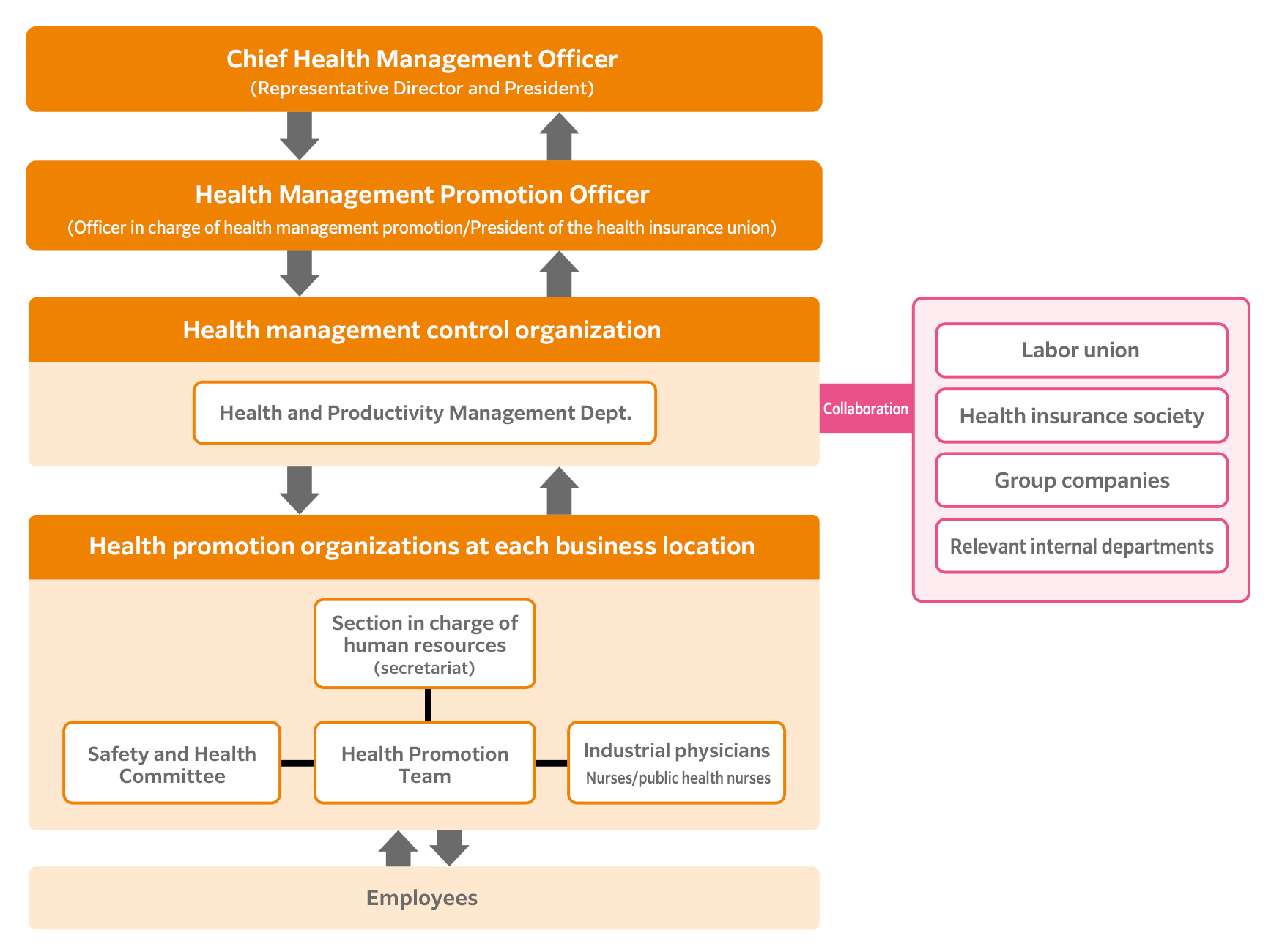
At The Nisshin OilliO Group, our health management initiatives are led by top management, who serves as the chief health management officer. Centered around the dedicated Health and Productivity Management Department, we work in collaboration with each business location and our health insurance society to advance these efforts as a unified company. Starting in FY2020, we established health promotion teams at each of our business locations to strengthen employee-participation initiatives. These teams develop and implement plans designed specifically for their locations while vigorously promoting the deployment of company-wide initiatives.

Key initiatives

  • Preventing lifestyle-related diseases/disorders

    To prevent lifestyle-related diseases/disorders, we must improve our indexes pertaining to obesity, blood pressure, blood sugar, and lipids. To reduce the risk of diseases/disorders among employees, we will make efforts to help improve their dietary habits and exercise routines.

  • Promoting smoking cessation

    Smoking is a critical risk factor associated with cancer and many other diseases. The percentage of smokers in the Company has decreased over the years, but to promote further smoking cessation, we will make efforts to subsidize the cost of quitting, provide information, raise awareness, and improve the non-smoking environment.

  • Supporting mental health

    We are committed to promoting the mental health of our employees so that they can maintain their mental well-being, maximize their diverse personalities and abilities, and continue to work with vitality.

Health indicators

We monitor indicators over time to implement the PDCA cycle for each initiative.
Our health management measures have had a visible impact, with improvements noted in terms of blood lipid levels, exercise habits, and smoking rates. We will continue to take measures to address indicators that still present challenges as we work toward our targets for FY2028.

Key task Health indicators for achieving the task FY2020
Results
FY2021
Results
FY2022
Results
FY2023
Results
FY2024
Results
FY2028
Targets
Prevent lifestyle-related diseases/disorders [Reduce the percentage of employees at risk of obesity]*1
Percentage of employees with BMI of 25 or higher
30.1% 29.3% 29.1% 29.2% 28.1% 27% or less
[Reduce the percentage of employees at risk of hypertension]*1
Percentage of employees with systolic blood pressure of 130 mm Hg or higher, or diastolic blood pressure of 85 mm Hg or higher
34.4% 32.4% 32.8% 36.4% 35.2% 33% or less
[Reduce the percentage of employees at risk of diabetes]*1
Percentage of employees with a fasting blood sugar level of 100 mg/dL or higher, or HbA1c (NGSP value) of 5.6% or higher
41.0% 40.0% 39.9% 40.8% 46.8% 35% or less
[Reduce the percentage of employees at risk related to blood lipid level]*2
Percentage of employees with a fasting triglyceride level of 150 mg/dL or higher (or 175 mg/dL if fasting is not possible), or an HDL cholesterol level below 40 mg/dL
20.3% 20.8% 19.9% 19.8% 19.0% 18% or less
[Increase the percentage of employees who are regular exercisers]
Employees who exercise at least 30 minutes one or more times a week
35.9% 37.1% 37.0% 45.8% 46.8% 50% or more
Improve employees’ completion rate of metabolic syndrome-specific health guidance 98.3% 98.6% 100% 99.3% 98.7% 100%
Promote smoking cessation Reduce smoking rates 22.8% 21.9% 21.2% 20.4% 19.6% 17% or less
Support mental health Increase the percentage of employees who sleep an average of at least 6 hours/night 47.7% 47.4% 46.9% 72.2% 71.1% 70% or more
Obtain 90% or higher percentage of employees with a stress check test score of A or B 90.5% 88.3% 88.5% 87.9% 87.9% 91% or more
Obtain full participation in medical examinations and stress checks Maintain 100% rate of employees receiving medical examinations 100% 100% 100% 100% 100% 100%
Increase the percentage of employees receiving stress checks 95.7% 97.5% 97.5% 98.4% 98.0% 99.0%
Increase the percentage of employees’ family members receiving metabolic syndrome-specific health checkups (dependents aged 40 and older) 71.1% 70.6% 77.3% 76.1% 67.3% 70% or more
Increase the percentage of employees receiving thorough examinations 76.7% 88.4% 79.1% 81.7% 80.1% 90% or more
Treatment retention rate - - - 65.6% 37.2% -
Improve performance

Prevent productivity decline
[Increase engagement in work]
Average score of all employees on the two items: “I feel energized when I’m working” and “I take pride in my work” (4=Agree, 1=Disagree)
- - - 2.5 points 2.4 points -
[Reduce absenteeism]
Average number of days of leave taken, absences, or leaves of absence due to injury or illness
1.16 days 1.80 days 2.59 days 2.63 days 2.40 days 2 days or less
Percentage of full-time employees with long-term absences or leave taken for injury or illness*3 0.39% 0.38% 1.00% 0.97% 0.96% 1.0% or less
[Improve on presenteeism]
SPQ (the University of Tokyo one-item version) (average for all employees)*4
- 87.1% 86.9% 87.8% 86.2% 90% or more
[Improve health literacy]
Percentage of employees who are consistently aware of their own health and make efforts to promote their own health*3
- 59.3% 55.9% 56.9% 58.2% 70% or more

Key taskPreventing lifestyle diseases

Health indicators for achieving the task
[Reduce the percentage of employees at risk of obesity]*1
Percentage of employees with BMI higher than 25
FY2020
Results

30.1%
FY2021
Results

29.3%
FY2022
Results

29.1%
FY2023
Results

29.2%
FY2024
Results

28.1%
FY2028
Targets

27% or less
Health indicators for achieving the task
[Reduce the percentage of employees at risk of hypertension]*1
Percentage of employees with systolic blood pressure over 130 mm Hg or diastolic blood pressure over 85 mm Hg
FY2020
Results

34.4%
FY2021
Results

32.4%
FY2022
Results

32.8%
FY2023
Results

36.4%
FY2024
Results

35.2%
FY2028
Targets

33% or less
Health indicators for achieving the task
[Reduce the percentage of employees at risk of diabetes]*1
Percentage of employees with a fasting blood sugar level greater than 100 mg/dL or HbA1c (NGSP value) greater than 5.6%
FY2020
Results

41.0%
FY2021
Results

40.0%
FY2022
Results

39.9%
FY2023
Results

40.8%
FY2024
Results

46.8%
FY2028
Targets

35% or less
Health indicators for achieving the task
[Reduce the percentage of employees at risk related to blood lipid level]*2
Percentage of employees with fasting triglycerides greater than 150 mg/dL (or 175 mg/dL if fasting is not possible) or HDL cholesterol less than 40 mg/dL
FY2020
Results

20.3%
FY2021
Results

20.8%
FY2022
Results

19.9%
FY2023
Results

19.8%
FY2024
Results

19.0%
FY2028
Targets

18% or less
Health indicators for achieving the task
[Increase the percentage of employees who are regular exercisers]
Employees who exercise at least 30 minutes at least once a week
FY2020
Results

35.9%
FY2021
Results

37.1%
FY2022
Results

37.0%
FY2023
Results

45.8%
FY2024
Results

46.8%
FY2028
Targets

50% or more
Health indicators for achieving the task
Improve employees’ completion rate of metabolic syndrome-specific health guidance
FY2020
Results

98.3%
FY2021
Results

98.6%
FY2022
Targets

100%
FY2023
Results

-
FY2024
Results

98.7%
FY2028
Targets

100%

Key taskPromoting smoking cessation

Health indicators for achieving the task
Reduce smoking rates
FY2020
Results

22.8%
FY2021
Results

21.9%
FY2022
Results

21.2%
FY2023
Results

20.4%
FY2024
Results

19.6%
FY2028
Targets

17% or less

Key taskSupporting mental health

Health indicators for achieving the task
Increase the percentage of employees who sleep an average of at least 6 hours/night
FY2020
Results

47.7%
FY2021
Results

47.4%
FY2022
Results

46.9%
FY2023
Results

72.2%
FY2024
Results

71.1%
FY2028
Targets

70% or more
Health indicators for achieving the task
Percentage of employees with a stress check test score of A or B of at least 90%
FY2020
Results

90.5%
FY2021
Results

88.3%
FY2022
Results

88.5%
FY2023
Results

87.9%
FY2024
Results

87.9%
FY2028
Targets

91% or more

Key taskFull participation in medical examinations and stress checks

Health indicators for achieving the task
Maintain 100% rate of employees receiving medical examinations
FY2020
Results

100%
FY2021
Results

100%
FY2022
Results

100%
FY2023
Results

100%
FY2024
Results

100%
FY2028
Targets

100%
Health indicators for achieving the task
Increase the percentage of employees receiving stress checks
FY2020
Results

95.7%
FY2021
Results

97.5%
FY2022
Results

97.5%
FY2023
Results

98.4%
FY2024
Results

98.0%
FY2028
Targets

99.0%
Health indicators for achieving the task
Increase the percentage of employees’ family members receiving metabolic syndrome-specific health checkups (dependents age 40 and older)
FY2020
Results

71.1%
FY2021
Results

70.6%
FY2022
Results

77.3%
FY2023
Targets

76.1%
FY2024
Results

67.3%
FY2028
Targets

70% or more
Health indicators for achieving the task
Increase the percentage of employees receiving thorough examinations
FY2020
Results

76.7%
FY2021
Results

88.4%
FY2022
Results

79.1%
FY2023
Results

81.7%
FY2024
Results

80.1%
FY2028
Targets

90% or more
Health indicators for achieving the task
Treatment retention rate
FY2020
Results

-
FY2021
Results

-
FY2024
Results

-
FY2023
Results

65.6%
FY2022
Results

37.2%
FY2028
Targets

-

Key taskImproving performance and preventing productivity loss

Health indicators for achieving the task
[Increase engagement in work]
Average score of all employees’ responses to two prompts: “When I am working, I feel full of vitality” and “I feel proud of my work” (on a scale from “Agree” (4 points) to “Disagree” (1 point))
FY2020
Results

-
FY2021
Results

-
FY2024
Results

-
FY2023
Results

2.5 points
FY2022
Results

2.4 points
FY2028
Targets

-
Health indicators for achieving the task
[Reduce absenteeism]
Average number of days of leave taken, absences, or leaves of absence due to injury or illness
FY2020
Results

1.16 days
FY2021
Results

1.80 days
FY2022
Results

2.59 days
FY2023
Results

2.63 days
FY2024
Results

2.40 day
FY2028
Targets

2.00 days
Health indicators for achieving the task
Percentage of full-time employees with long-term absences or leave taken for injury or illness*3
FY2020
Results

0.39%
FY2021
Results

0.38%
FY2022
Results

1.00%
FY2023
Results

0.97%
FY2024
Results

0.96%
FY2028
Targets

1.0% or less
Health indicators for achieving the task
[Improve on presenteeism]
SPQ (the University of Tokyo one-item version) (average for all employees)*4
FY2020
Results

-
FY2021
Results

87.1%
FY2022
Results

86.9%
FY2023
Results

87.8%
FY2024
Results

86.2%
FY2028
Targets

90% or more
Health indicators for achieving the task
[Improve health literacy]
Percentage of employees who are consistently aware of their own health and make efforts to promote their own health*3
FY2020
Results

-
FY2021
Results

59.3%
FY2022
Results

55.9%
FY2023
Results

56.9%
FY2024
Results

58.2%
FY2028
Targets

70% or more

*1 Data for employees aged 35 and older.

*2 Data for employees aged 35 and older. Through FY2023, percentage of employees with a triglyceride level of 150 mg/dL or higher, or an HDL cholesterol level below 40 mg/dL.

*3 Employees who experienced long-term absences (more than one month consecutively) or leaves of absence during the period. Includes absences carried over from the previous fiscal year, but excludes the use of paid leave or accumulated paid leave, as well as absences resulting from accidents.

*4 An internal survey was conducted to gain insights into employees’ sense of achievement and personal growth through their work, the trust they receive from colleagues, and their perception of contributing to society and the Company (FY2024: 1,433 employees surveyed; response rate: 99.2%).

Specific efforts

Logo and tagline

The logo and tagline, which serve as symbols of our health management activities, were created based on ideas submitted by our employees and their families. We use the logo and tagline to broadly disseminate our health management initiatives so that all employees can work together to promote health.

“Our Common Goal: Healthy OilliO”

Prevention

It is an integral responsibility of the company to consider the physical and mental well-being of its employees. We are working to enhance health checkup services, implement regular self-assessment through stress checks, and strengthen our support systems so that every employee can thrive and perform at their best. In cooperation with the health insurance society, we are also committed to disease prevention projects such as cancer screenings, subsidies for physical examinations, and free dental examinations. As a preventative measure against infectious diseases, we cover part of the cost of influenza vaccinations and provide in-house group vaccinations so that employees can be vaccinated during work hours. Additionally, we regularly hold health seminars and checkup events to raise awareness of health preservation.

Key initiatives in FY2024

Online health seminars Eight seminars were held on topics such as exercise, nutrition, sleep, and relaxation (183 participants).
Health seminars: Learn through videos Six original video seminars were produced on topics including women’s health issues, cancer prevention, responsible drinking, mental health, pollen allergies, and work-life balance. They were made available on demand. (Women’s Health Issues: 90 participants)
Health checkup event A health checkup event was held to offer simple tests for items not covered in regular health checkups, such as the amount and balance of muscle and fat, posture, and skin age checks (209 participants at the Head Office, 97.2% satisfaction rate)

Improving dietary habits

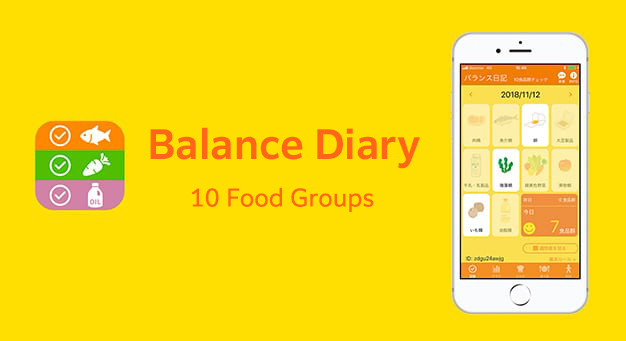
As a company involved in food and the daily diet, it is our mission to contribute to the health of many generations. We collaborated with the Tokyo Metropolitan Geriatric Hospital and Institute of Gerontology to develop a free self-check food app called “Balance Diary: 10 Food Groups,” which is open to the public and is actively used by employees.

Additionally, to support employees’ health in terms of what they regularly eat, employee cafeterias provide the Company’s healthy oils and salad dressings and serve healthy and nutritionally balanced set menus, where the foods used from the 10 food groups are indicated on the menu. These and other efforts have been well received by employees. In 2021, we began offering meals at the employee cafeterias in line with the Smart Meal standards reviewed and certified under the Certification System for Healthy Meal and Food Environment.* We believe that eating an ideally nutritionally balanced diet will lead to increased vegetable intake and improved sodium intake, ultimately preventing lifestyle-related diseases/disorders (one of our greatest health challenges).

Furthermore, the Sakai Plant and the Mizushima Complex introduced Office De Yasai (Vegetables in the Office), a program that lets employees maintain healthy dietary habits and have nutritionally balanced meals at the office. The Nagoya Plant has begun offering individual salads in cups and side dishes made primarily with vegetables as well as miso soup and other soups containing an abundance of vegetables.

* The Certification System for Healthy Meal and Food Environment certifies stores and establishments that continuously provide nutritionally balanced meals (“Smart Meals”) that help promote good health in healthy spaces for food service, home meal replacements, and meals for corporate cafeterias. The certification is provided by the Consortium for Healthy Meal and Food Environment, which comprises 13 academic societies that support the project, including the Japanese Society of Nutrition and Dietetics and the Japan Diabetes Society.

Balance Diary

Example of a cafeteria meal

Smart Meal logo

Promoting smoking cessation

To encourage employees to quit smoking and prevent health hazards caused by passive smoking, we are in the process of eliminating smoking rooms or restricting their use during working hours. We subsidize the cost of outpatient and online smoking cessation treatment programs and nicotine gum-based short-term introductory smoking cessation programs for employees and their family members who are trying to quit smoking. From FY2022 to FY2023, we held the Team Smoking Cessation Marathon, an event in which one smoker and two nonsmoker supporters teamed up to tackle the challenge to quit smoking. Fourteen teams from across the Company participated, 10 of whom successfully completed the challenge. As of June 2025, a total of 43 employees have used the Company’s support system, which began in FY2021.

Promoting exercise and communication

We encourage and support volunteer after-hours activities (“clubs”) to physically and mentally rejuvenate employees and invigorate communication at business locations throughout Japan. Employees of all ages come together to participate in approximately 20 clubs, including baseball, table tennis, and badminton. We have also installed training rooms at some of our business locations to facilitate employee engagement in physical activity.

In 2020, we launched The Nisshin OilliO Group Health Portal Site to raise awareness and encourage behavioral change and development of healthy habits. We have developed a points system where points are awarded for daily walking and other efforts to promote health. The points can be redeemed for products. We also put on walking events using this website, publish step count rankings (individual and departmental), and undertake other measures to make health promotion fun and motivating.

Reference information

Health Portal Site

Participation rate: 55.2% (as of July 2025)
Amount of investment: Roughly 2.42 million yen (FY2024)

Number of people who completed the requirement* for the three-month walking event: 269 (FY2022), 262 (FY2023), 263 (FY2024)

* Walk at least 500,000 steps in three months

Occupational safety and health initiatives

As part of our occupational safety and health management system, we regularly hold meetings of the Safety and Health Committee and the Safety, Health, and Disaster Prevention Committee, which are established at each business location. These meetings are attended by representatives of the Company and the labor union, and discussions are held to ensure the safety of employees and to create a workplace where they can work comfortably and with a sense of security.

Based on the policies and plans formulated by these committees, employees in charge of promoting occupational safety and health take the lead in implementing initiatives including preventive management aimed at predicting hazards and eliminating potential hazards in advance from a risk management perspective, improvement of work environments, and maintenance and promotion of employee health. We not only comply with the Industrial Safety and Health Act and other relevant laws and regulations, but also actively develop measures to ensure the safety of all employees and link them with our health management initiatives.

For data on safety, health, and disaster prevention, see our Sustainability Data Book.

White 500 certification We were certified as a 2025 Health & Productivity Management Outstanding Organization (large enterprise category) under the certification system jointly operated by the Ministry of Economy, Trade and Industry and the Nippon Kenko Kaigi (“Japan Health Council”). Under the system, companies’ level of health management is evaluated, and the top 500 companies in the large enterprise category are recognized as “White 500.” We were first certified as a White 500 company in 2017, and this marks the seventh time we have been certified.